
Today’s call was one of those classic “everything has power but nothing’s working” mysteries. A homeowner called saying their furnace wouldn’t run—not the fan, not the A/C, nothing. They were already ahead of most calls because they’d checked all the basics:
- Breakers – fine
- Safety switches – all on
- Thermostat batteries – replaced
Still, the system was dead silent. No fan, no clicks, nothing. Here’s how I walked through it and what you can learn if you ever run into the same situation.
Step 1: Look for the Telltale Signs of No Control Power
The first thing I asked was, “Is the thermostat still lit up?”
When the homeowner said yes, I knew there was at least some low-voltage power. But when I asked them to switch the fan to “ON,” they said it stayed silent. That’s usually a clue the control voltage isn’t making it past the board—or something is shutting it down.
Step 2: Check the Obvious (Again)
Even though the homeowner had already checked the door switch and breakers, I always verify. One loose blower door can shut a whole system down, and you wouldn’t believe how many times that’s been the fix.
Everything was fine there. Time to dig deeper.
Step 3: Inspect the Control Board
I popped off the furnace door and immediately checked the LED indicator on the control board. No light. That told me there was no 24V control power going out to the thermostat or blower relay.
On most furnaces, when there’s no control voltage but you still have 120V power, the most likely culprit is a blown 3-amp automotive-style fuse on the board.
Here’s the board from this call:
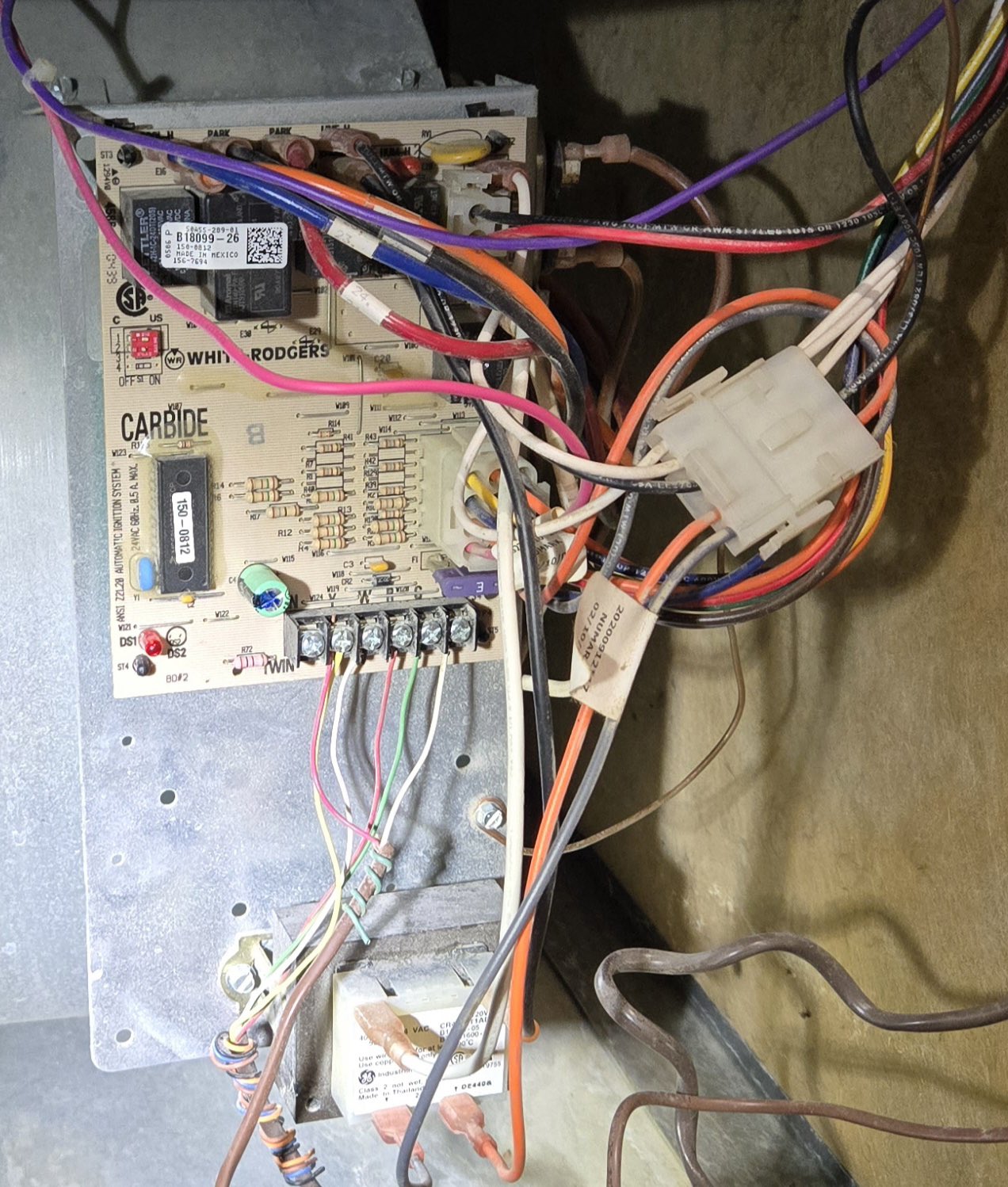
The purple 3A fuse is sitting in the bottom-right corner of the board.
Sure enough, this one had a purple 3A fuse sitting there with a tiny burn mark.
Step 4: Replace the Fuse—But Why Did It Blow?
I always caution: never just replace a fuse and walk away. Something caused it to blow.
The homeowner had recently done some yard work around the A/C unit, and when I checked outside, I found a thermostat wire pinched under the corner of the condenser cover. That exposed copper was shorting to ground every time the system tried to kick on.
I repaired the wiring, replaced the fuse, and boom—fan kicked right on.
Step 5: The Fuse That Fixed It
For those curious, here’s the blown fuse compared to the new one:
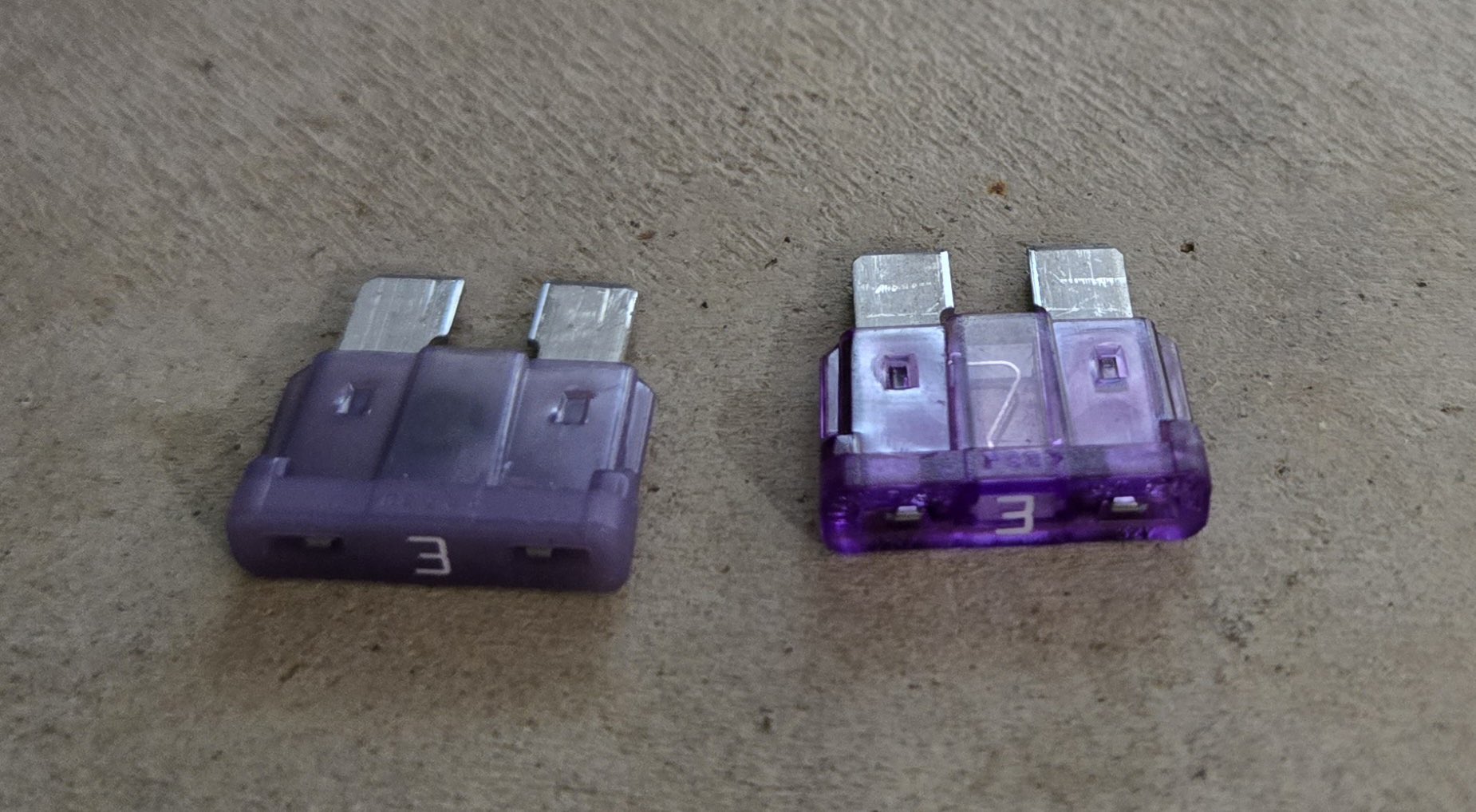
The left fuse is the blown one—notice the dark burn mark in the center.
And here’s a close-up of the one that came out of the furnace:
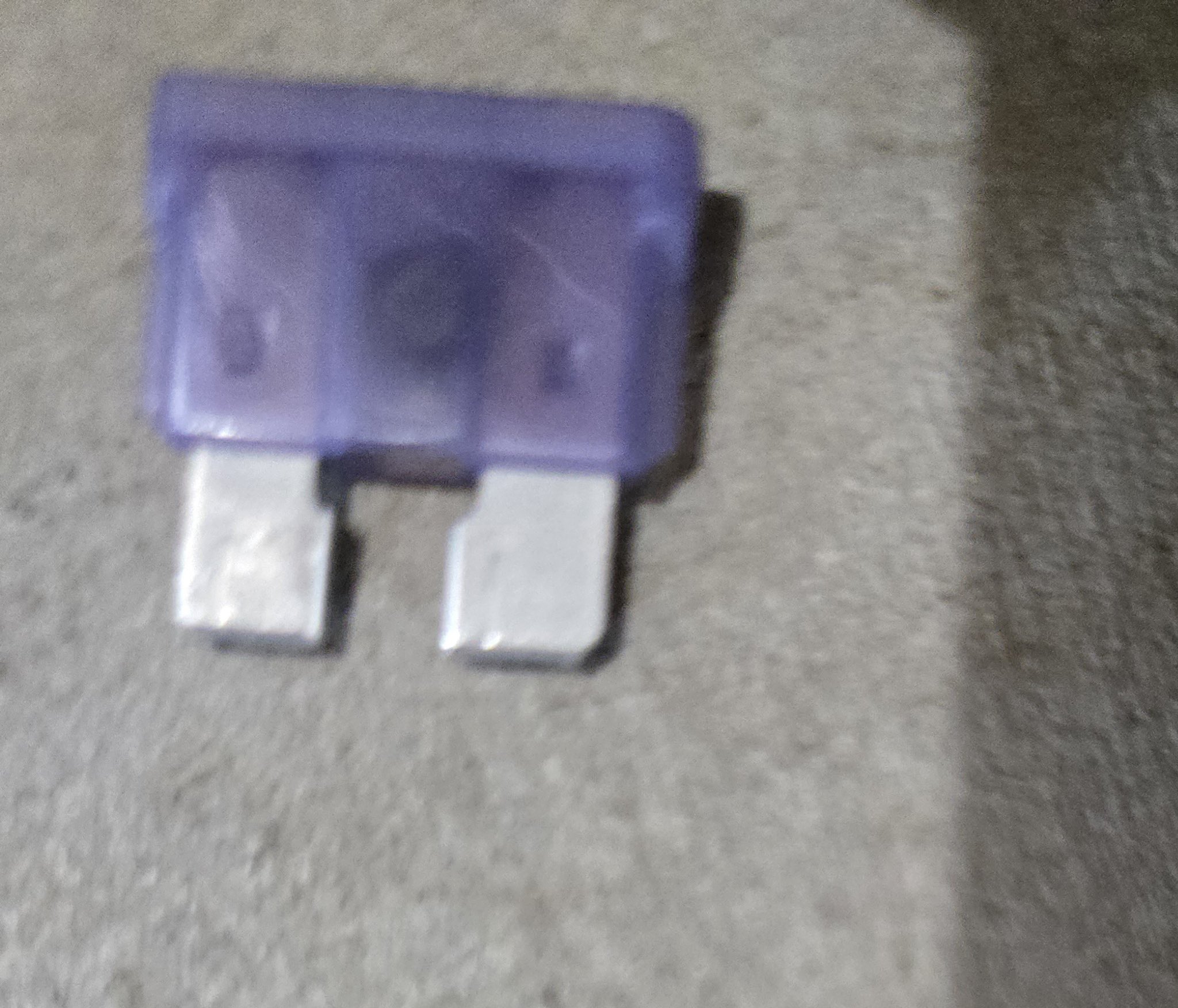
Even a small blackened spot is enough to kill the whole system.
Step 6: Lessons for Homeowners
If your system is completely dead but you’ve checked the breakers and thermostat:
- A blown 3A fuse is a very common issue. It protects the low-voltage control circuit.
- The fuse blows for a reason. Usually it’s a shorted thermostat wire (often outside near the A/C).
- Don’t oversize the fuse. Stick with the exact replacement (3A or 5A as marked). A bigger fuse can fry your control board.
If you’re comfortable, you can look for this fuse yourself. If not, call a pro—because finding why it blew is just as important as replacing it.
Final Thoughts
One little 3A fuse took down the whole system, but that’s exactly what it’s supposed to do—protect expensive parts like your control board. In this case, a quick diagnosis and a $2 fuse saved the homeowner from a much bigger repair bill.
🛠️ Recommended Tools & Parts
- Replacement 3A Automotive Fuses (Pack) – Keep a few extras on hand for future issues.
- Basic HVAC Multimeter – Handy for checking power and diagnosing simple problems.
- 18/5 Thermostat Wire – Perfect if you need to replace damaged low-voltage wiring.
- Wire Strippers & Cutters – A must-have for any quick thermostat wire repair.
- Mini Screwdriver Set – Great for opening control panels and working in tight spaces.
Disclosure: As an Amazon Associate, I earn from qualifying purchases. This helps support the blog at no extra cost to you.
Riley’s Tip of the Day
If you’re ever replacing thermostat wires or moving them around near your condenser, make sure they’re not pinched under metal panels. A pinched wire is the #1 cause of blown fuses I see in the summer.

